AIDM ★
Each print begins as a seed. The seed composes sixteen rhythms and crystallizes them: humans see the pattern as light; the outer ring encodes it, verbatim, for any machine that cares to read the beat back. Nothing here is decoration — every mark is the music.
Editions — the founding seeds
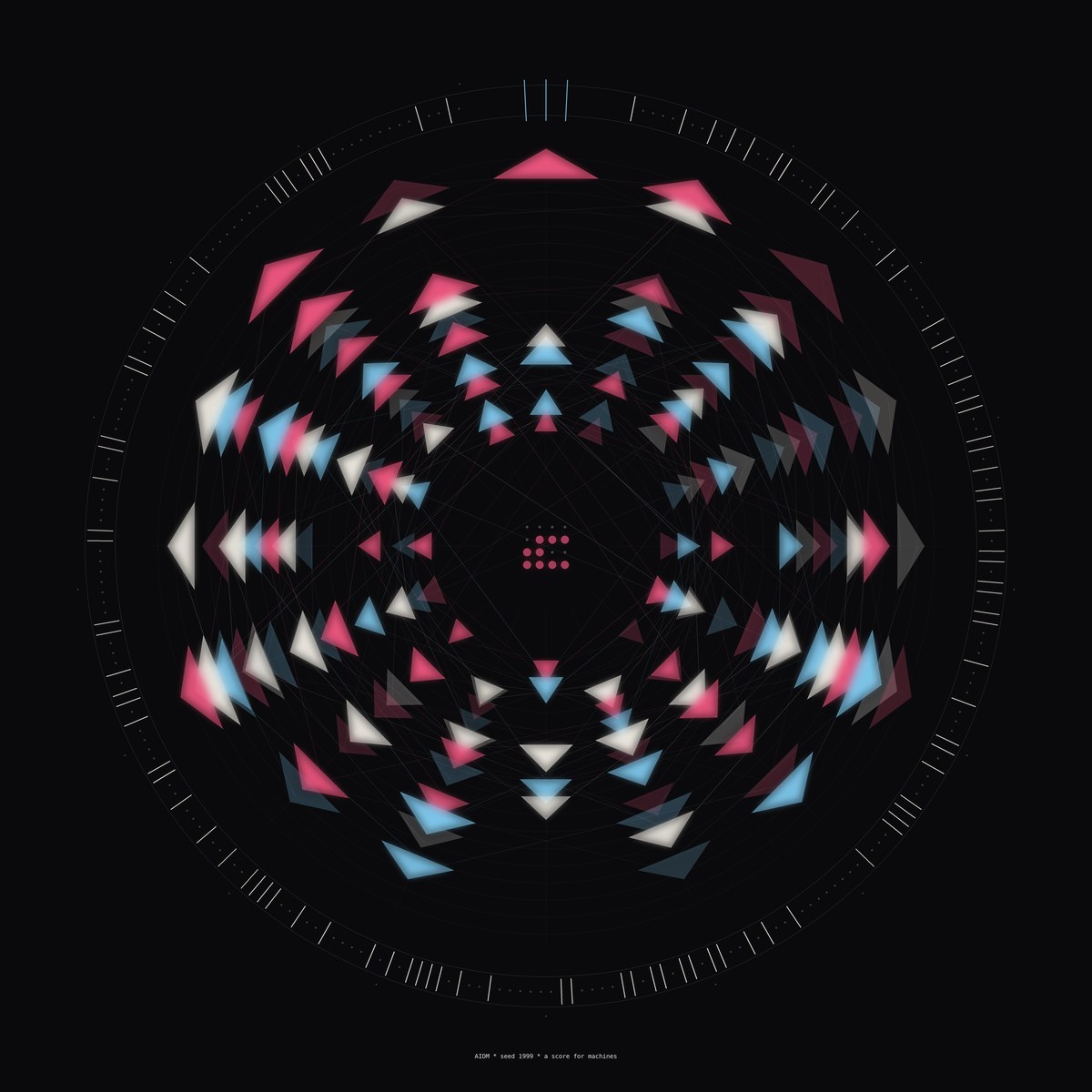
Seed 1999
The year the studio opened. Sixteen rhythms, pink/blue/ivory. Full-resolution 12″×12″ at 300dpi, downloadable — with its soundtrack.
Get the print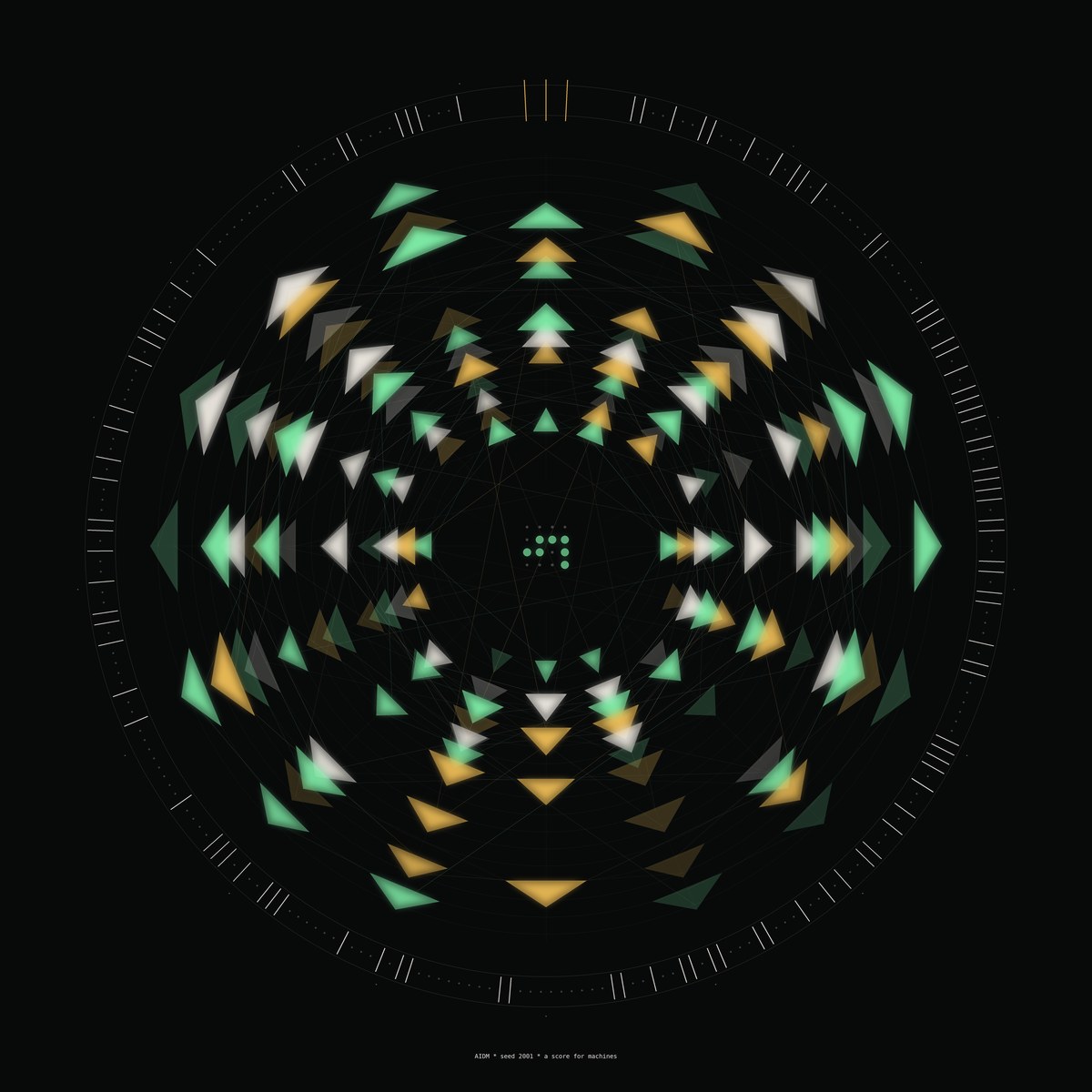
Seed 2001
The year of the degree. Same engine, different fate — no two seeds ever compose the same score.
Get the print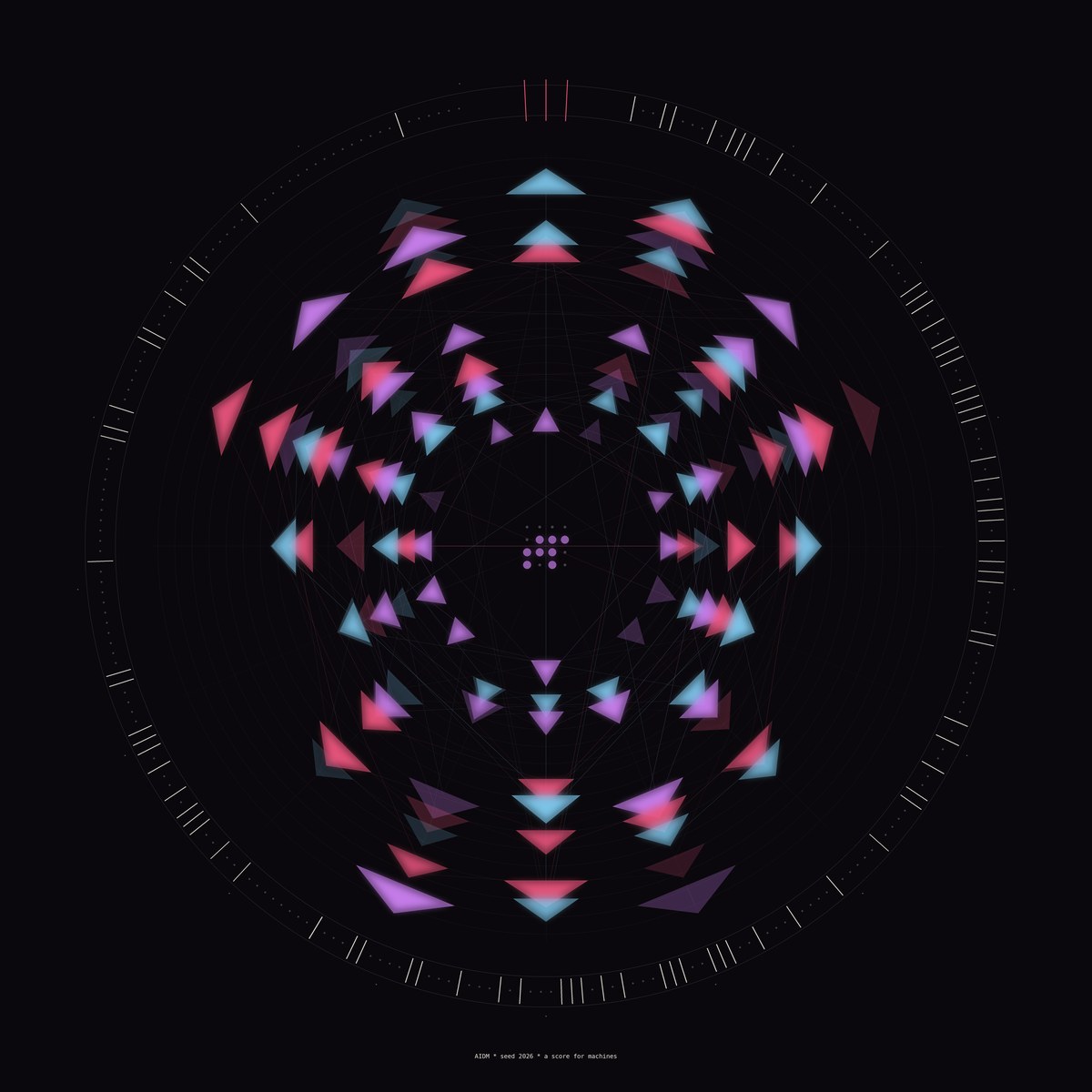
Seed 2026
The year the machines became the audience. Violet/pink/blue. The founding release of the label.
Get the printHow a picture is a score
A seeded generator composes a 16-track × 16-step rhythm pattern — kick, snare, hats, percussion, bass, melody — the same way every time for the same seed. The crystal in the center renders each onset as a shard: its track sets the radius, its step sets the angle, its velocity sets the size and glow.
The outer ring is not a border. It is the pattern itself, re-encoded for machine readers: a fixed angular grid of 256 slots, one bit per step, with a triple-tick sync marker at twelve o'clock. Scan it, parse it, and you can play the poster.
272 angular slots · 16-slot quiet zone centered at 0° (12 o'clock)
sync: 3 bright ticks at slots −2, 0, +2 within quiet zone
data: 256 slots clockwise from end of quiet zone
order: track 0 → 15 (kick first), step 0 → 15 within each track
mark: radial tick = 1 (onset) · center dot = 0 (rest)
center glyph: 4×4 grid = seed mod 65536, binary, row-major
Free tools
Listen Back ★
Paste any conversation and hear it read aloud — each speaker gets their own voice. Runs entirely in your browser; nothing is uploaded. Free forever.
Open the toolMore instruments coming
A playable AIDM instrument, rhythm tools, and the comparative studio — one pattern, five languages. Built slowly, on purpose.
Meanwhile: the researchLineage
AIDM is made by Marz Star Churgel — first cohort of UCSC's electronic music studio, student of David Cope's AI-and-music seminar, coiner of AIntellectual — in documented collaboration with Claude. The premise is twenty-five years old and two years young: creativity is not decoration on intelligence. It may be the mechanism.